A stroke can change how a person moves, speaks, thinks, and handles everyday tasks. Rehabilitation is how survivors work to regain as much of that function as possible. At The Rai Clinic, also known as Physical Medicine and Rehabilitation of Long Island, board-certified physiatrist Dr. Paulinder Rai leads rehabilitation for stroke survivors. Knowing what the process involves can make the road ahead feel more manageable for patients and families.
When Does Stroke Rehabilitation Start?
Rehabilitation often begins in the hospital, sometimes within the first day or two, once the patient is medically stable. Early on, the focus is on gentle movement, such as sitting up and getting out of bed with help. After discharge, rehab continues in the setting that best fits the patient’s needs, which may include:
- An inpatient rehabilitation facility, for intensive daily therapy
- A skilled nursing or subacute facility, for patients who need more time before intensive therapy
- Home health care, with therapists visiting the home
- Outpatient care at a clinic or physician’s office
What Stroke Rehabilitation Works On
Every stroke is different, so every rehab plan is different. Depending on which part of the brain was affected, therapy may focus on:
- Mobility and walking: standing, balance, safe transfers, and using a cane or walker if needed
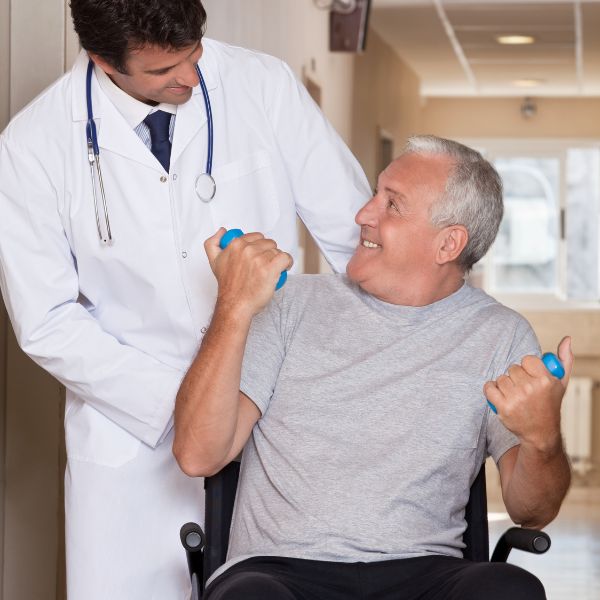
- Strength and coordination: exercises that retrain weakened muscles, often on one side of the body
- Range of motion: stretching and movement to prevent stiffness and keep joints flexible
- Daily activities: relearning tasks like dressing, bathing, and cooking, often with new techniques or tools
- Speech, language, and swallowing: rebuilding communication skills and safe eating
- Muscle tightness: managing spasticity so it does not limit movement or cause pain
Some survivors also face changes they did not expect, such as drop foot, fatigue, or trouble with memory and concentration. These and other after-effects of a stroke can improve with focused therapy.
Who Is on the Rehab Team?
Stroke rehabilitation works best as a team effort. A physiatrist, a physician who specializes in physical medicine and rehabilitation, evaluates how the stroke has affected function and coordinates the overall plan. Physical, occupational, and speech-language therapists then work with the patient on specific goals.
When muscle tightness gets in the way, spasticity management, including botulinum toxin injections, can relax tight muscles and make therapy more effective.
How Long Does Recovery Take?
Recovery looks different for everyone. The most noticeable progress usually happens in the first three months, when the brain is adapting most actively. Even so, recovery can continue for months or years, even after formal therapy ends. Practicing exercises at home between sessions helps carry progress forward.
Lowering the Risk of Another Stroke
A stroke raises the risk of having another one. Managing blood pressure, cholesterol, diabetes, and other risk factors with your doctor, along with staying active and not smoking, is an important part of every recovery plan.
Stroke Rehabilitation With Dr. Rai
Dr. Rai and our team provide physiatrist-led stroke rehabilitation in Suffolk County, with care built around each patient’s goals. For patients on the South Shore, our stroke rehab in Bay Shore offers the same approach close to home.
To schedule an evaluation, call (631) 300-0797 or request an appointment online.