Physiatrist-Led Stroke Rehabilitation in Suffolk County
Recovering from a stroke takes more than one type of therapy. It takes a team that works from the same plan. At The Rai Clinic, also known as Physical Medicine and Rehabilitation of Long Island, stroke rehabilitation in Suffolk County is led by a physiatrist, a physician who specializes in restoring movement and function. Dr. Paulinder Rai, who is board-certified in Physical Medicine and Rehabilitation, and our team help stroke survivors rebuild strength, mobility, communication, and independence.
Our offices in Brightwaters and Patchogue serve patients from Bay Shore, West Islip, and communities across the South Shore of Long Island.
How a Stroke Can Affect Daily Life
A stroke happens when blood flow to part of the brain is blocked or when a blood vessel in the brain bursts. Without a steady supply of oxygen, brain cells in the affected area are damaged, and the parts of the body they control can stop working the way they did before. Stroke is a leading cause of serious long-term disability in the United States, which is why focused rehabilitation matters so much.
The effects depend on which part of the brain was injured and how severely. Common challenges after a stroke include:
- Weakness or paralysis on one side of the body
- Trouble with balance, walking, or getting up from a chair
- Reduced use of the arm or hand
- Muscle tightness and stiffness, known as spasticity
- Difficulty speaking, understanding language, or swallowing
- Changes in memory, attention, or problem-solving
- Foot drop, which makes it hard to lift the front of the foot while walking
What a Stroke Rehabilitation Doctor Does
A physiatrist looks at the whole picture of your recovery. Your therapists focus on specific skills, while your physiatrist evaluates how the stroke has affected your nerves, muscles, and movement; sets realistic goals with you and your family; and coordinates your therapy plan as you progress.
Your physiatrist also manages the medical issues that can slow recovery, such as spasticity, pain, and shoulder problems on the affected side. When needed, testing such as electromyography (EMG) and gait analysis helps measure how your muscles and nerves are working and how your walking changes over time.
Our Stroke Rehabilitation Services
Physical Therapy
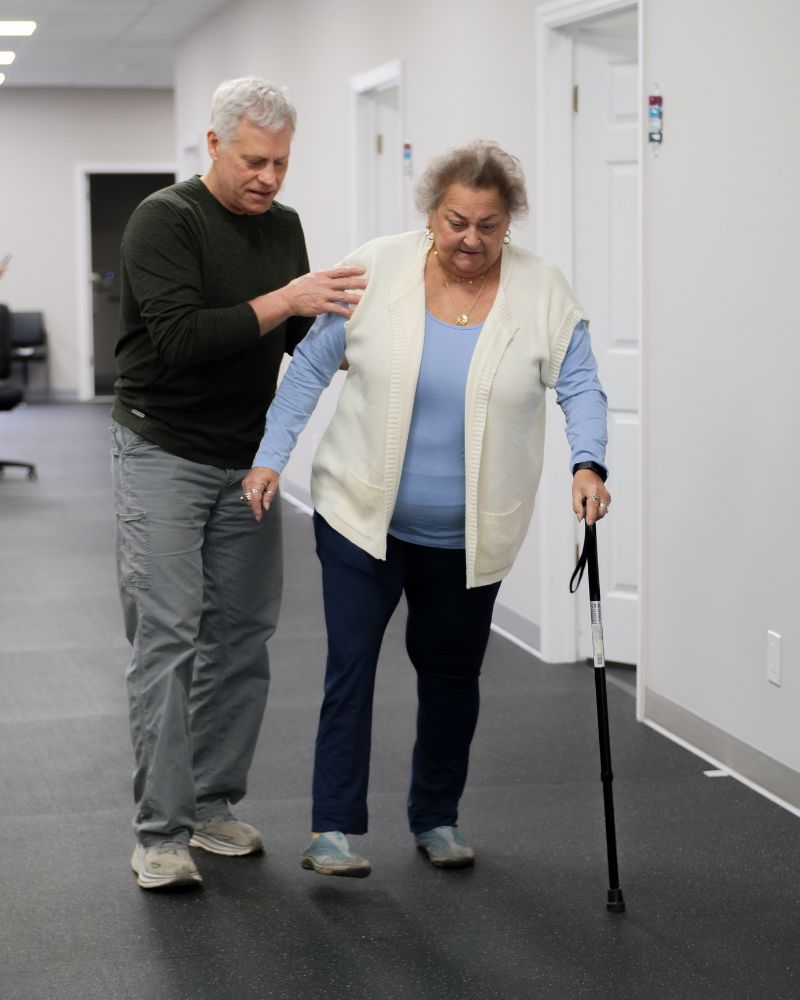
Physical therapy focuses on strength, balance, and walking. Sessions may include balance training, gait training, and exercises that retrain the affected side of the body. The goal is to help you move more safely at home and in the community.
Occupational Therapy
Occupational therapy helps you regain the ability to handle daily tasks such as dressing, bathing, cooking, and writing. Therapists work on arm and hand function and coordination, and they can recommend adaptive strategies and equipment when a task needs to be done differently.
Speech-Language Therapy
Many stroke survivors have trouble finding words, speaking clearly, or swallowing safely. Our speech-language therapy addresses communication and swallowing, along with the thinking skills, such as memory and attention, that affect everyday conversation.
Spasticity Management and Botulinum Toxin Injections
Spasticity can make muscles feel tight, cause the hand to curl or the foot to point downward, and make movement and personal care more difficult. For patients with chronic spasticity after a stroke, we offer spasticity management, including botulinum toxin injections that relax targeted muscles so therapy can be more effective.
Foot Drop and Bracing
Foot drop is one of the most common walking problems after a stroke, and the outlook depends on how much nerve and muscle function returns. Strengthening, gait training, and an ankle-foot orthosis (AFO) often work together to make walking safer. The right combination of treatments for foot drop following a stroke can change as your recovery progresses.
Moving From the Hospital to Outpatient Rehab
Stroke recovery often moves through several settings: from the hospital to an inpatient rehabilitation facility or skilled nursing facility, and then home with outpatient therapy. Our team can guide families through choosing an inpatient rehabilitation facility and continue care once you return home, so your plan does not start over at each step.
Is It Too Late to Start Stroke Rehabilitation?
The fastest gains usually happen in the first few months after a stroke, which is why starting rehabilitation early matters. Recovery does not stop on a set date, though. Many people can keep improving their strength, walking, and daily function months or even years later with consistent, targeted therapy. If you finished therapy but still struggle with tightness, balance, or everyday tasks, a new evaluation can show what is still possible.
What to Expect at Your First Visit
Your first appointment begins with a review of your medical history and hospital records, followed by an examination of your strength, movement, balance, and muscle tone. Your physiatrist will talk with you, and with your family if you wish, about your goals. Your treatment plan is then built around those goals.
To make the visit as productive as possible, bring your hospital discharge summary, a list of your current medications, and any braces or mobility aids you use.
Stroke Rehabilitation Close to Home
Our offices at 234 Orinoco Drive in Brightwaters and 319 East Main Street in Patchogue are open Monday through Friday from 9 a.m. to 4 p.m., with Saturday visits available by appointment. Telemedicine visits are also available. We accept most major insurance plans.
If you live in or near Bay Shore, our Brightwaters office is just minutes away. Dr. Rai's team provides stroke rehab in Bay Shore with the same physiatrist-led approach described on this page.
Schedule a Stroke Rehabilitation Evaluation
Whether your stroke was recent or happened years ago, our team is ready to help you take the next step. Call (631) 300-0797 or request an appointment online to schedule your evaluation.